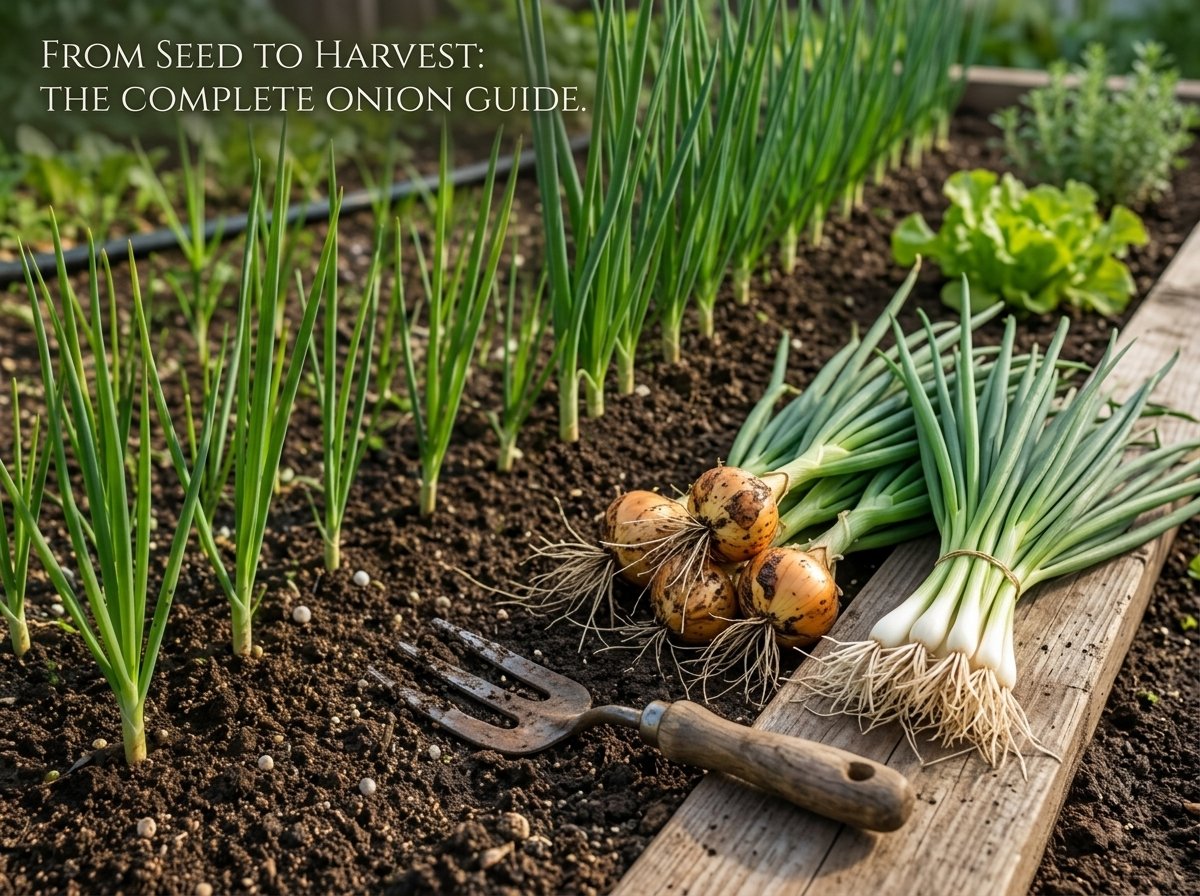
If you’ve ever tucked a few onion seedlings into the ground and watched them sit there, barely moving, for weeks on end, you already know the frustration. You did everything “right” — good soil, regular watering, decent sun — and still, growth crawled along at a pace that made you wonder if you’d done something wrong.
Here’s the truth most people never get told: onions are picky about how they’re planted, not just where. Get the first few days right, and the difference in root development and growth speed is almost night and day.
Why the First Few Days Matter More Than Anything Else
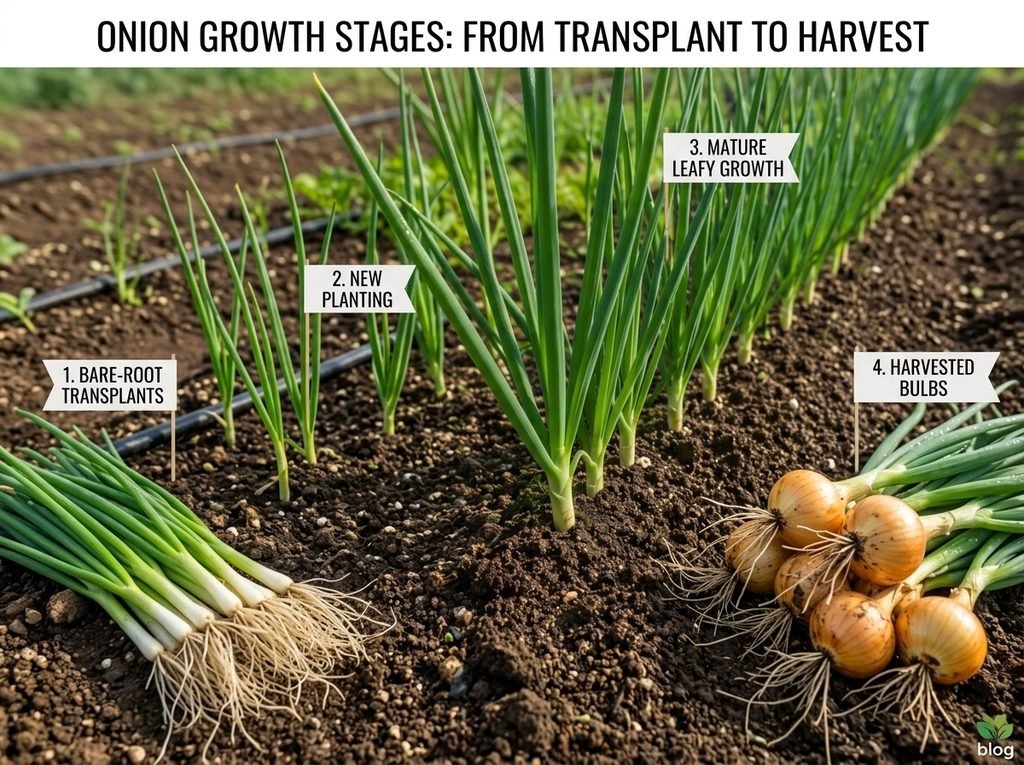
Onion seedlings are deceptively fragile right after transplanting. Their root systems are thin, shallow, and easily stressed, which means the plant spends its first stretch in the ground either establishing itself quickly — or stalling out while it recovers from shock. Most of the “slow growing onion” complaints people have actually trace back to this early window, not to anything that happens later in the season.
The good news is that a handful of small adjustments at planting time can push your seedlings toward the “quickly established” path instead of the “stalled and struggling” one.
Start With Healthy, Well-Prepped Seedlings
Before the seedling ever touches soil, take a look at the roots. Strong, pale, thread-like roots are what you want — not mushy, blackened, or overly dried-out ones. If the roots look dehydrated, a short soak in room-temperature water for 15 to 20 minutes before planting can rehydrate them and make the transition to soil much less stressful.
It also helps to trim the roots very lightly, just the very tips, if they’re unusually long and tangled. This isn’t necessary for every seedling, but for ones with a dense, matted root ball, a light trim encourages the plant to send out fresh new roots immediately rather than trying to untangle the old ones underground.
Give the Roots Room to Spread, Not Curl
One of the most common mistakes is planting an onion seedling into a hole that’s too narrow or too shallow, which forces the roots to curl upward or bend awkwardly instead of spreading downward. Curled roots struggle to anchor the plant and are slower to take up water and nutrients.
Instead, make a hole just deep enough that the roots can hang straight down without folding, and set the seedling so the white base sits just at or slightly below the soil surface — planting too deep can suffocate the developing bulb, while planting too shallow leaves the roots exposed and vulnerable.
Space Them Out for Airflow and Growth
Crowded onions compete with each other for nutrients, water, and light, which slows everyone down. Give each seedling a few inches of breathing room in every direction. Good spacing isn’t just about avoiding competition — it also improves airflow around the base of the plant, which helps prevent the fungal issues that thrive in damp, crowded conditions.
Water Immediately, Then Ease Off
Right after planting, give the seedlings a thorough watering to settle the soil around the roots and eliminate air pockets, which can otherwise dry out delicate root hairs. After that first watering, though, resist the urge to keep the soil constantly soaked. Onions actually root faster and develop sturdier growth when the soil is allowed to dry out slightly between waterings, since this encourages the roots to grow downward in search of moisture rather than staying shallow and lazy near the surface.
Feed Lightly, Not Heavily
It’s tempting to give new transplants a strong dose of fertilizer to “jump-start” them, but onion seedlings actually respond better to a light touch early on. A diluted, balanced feeding shortly after transplanting supports root establishment without overwhelming a plant that’s still adjusting to its new environment. Heavier feeding can wait until the plant has visibly taken hold and started producing new growth.
The Payoff: Bulbs Worth the Wait
Onions that get a strong, well-supported start rarely look back. Instead of sitting stagnant for weeks, they push out new green growth quickly, develop a dense root system that anchors them firmly in the soil, and go on to form the kind of full, healthy bulbs that make all that early attention worth it.
It’s a small window of extra care — a few adjustments in those first days after planting — but it’s often the single biggest factor separating a disappointing onion patch from a genuinely thriving one.