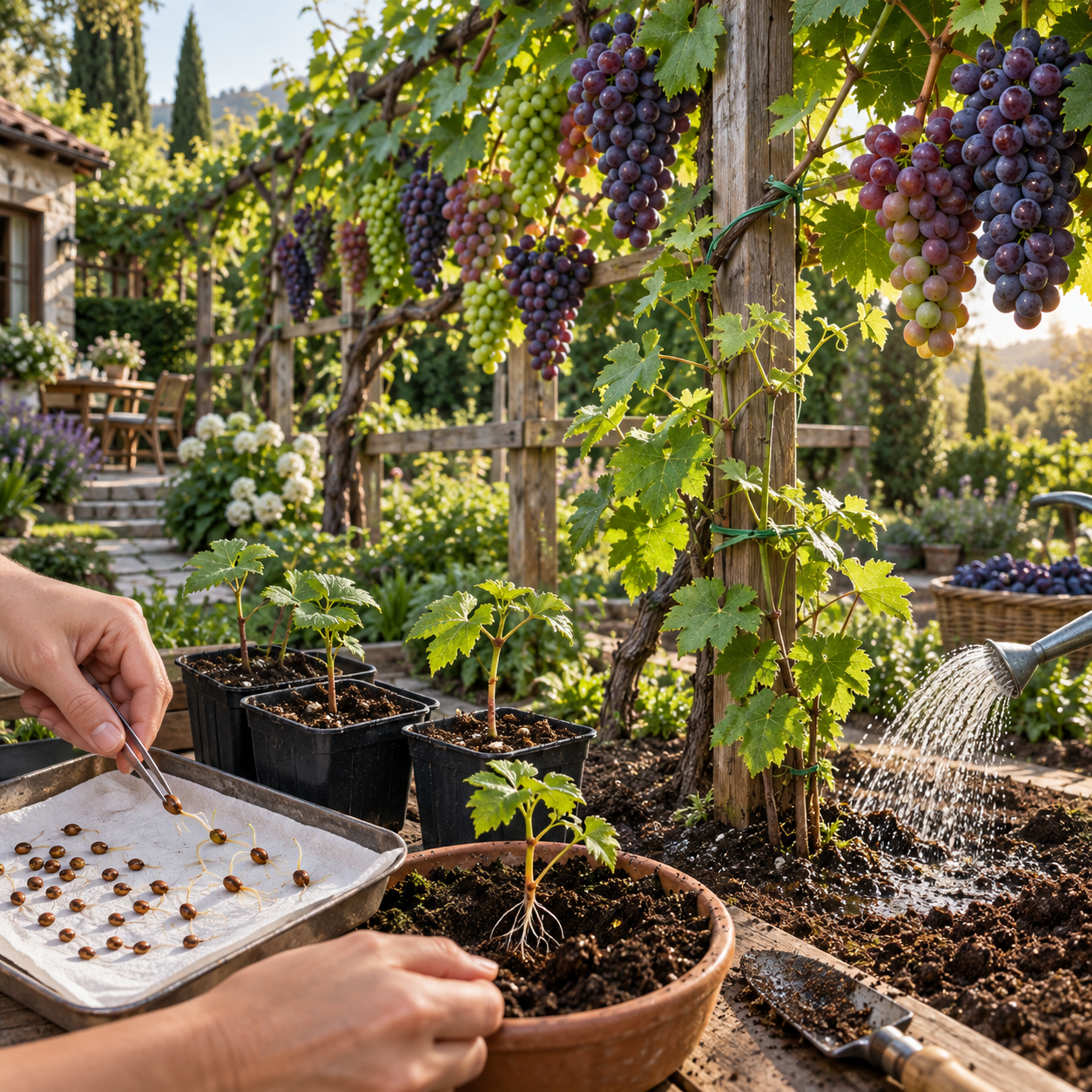
Growing grapes at home is a rewarding project that can transform a small sunny area into a productive fruit garden. With a healthy young vine, good soil, regular watering, and a strong trellis, grape plants can gradually develop into vigorous climbers covered with attractive bunches of fruit.
The method shown here begins with seeds taken from ripe purple grapes. These seeds are germinated in a moist environment, transferred into soil, grown into seedlings, and later planted outdoors beside a support structure. Over time, the vines are trained across the trellis until they become mature enough to flower and produce grape clusters.
One important fact should be understood before starting. Grapevines grown from seeds are genetically different from the fruit they came from. A seed removed from a sweet purple grape may grow successfully, but it does not guarantee that the new vine will produce grapes with exactly the same color, sweetness, size, or flavor. Gardeners who want to reproduce a specific variety should usually grow grapes from cuttings instead.
Choosing and Preparing the Grape Seeds
Begin with fully ripe, healthy grapes containing mature seeds.
Open the grapes gently and remove the seeds from the flesh. Wash them carefully to remove juice and pulp, because fruit residue can encourage mold during germination.
Select seeds that appear firm, full, and undamaged. Very soft, broken, or shriveled seeds are less likely to develop successfully.
You can prepare several seeds at the same time because germination rates may vary. Starting with multiple seeds also allows you to keep the healthiest seedlings later.
Germinating the Seeds
The reel uses a simple moist germination system.
Place the cleaned grape seeds on damp paper towel, cotton, or another absorbent material inside a shallow container.
Moisten the material thoroughly, but do not leave the seeds sitting in excessive water. They require moisture and oxygen rather than complete submersion.
Spread the seeds apart so that emerging roots do not become tangled.
Maintain consistent moisture and inspect the seeds regularly.
Grape seeds can have dormancy requirements and may not germinate as quickly as vegetable seeds. Some seeds may need a cold treatment period before they sprout successfully. Because grape seed behavior varies, patience is essential.
Once a seed begins producing a small white root, it is ready to be transferred carefully into soil.
Preparing the Growing Mix
Young grape seedlings benefit from loose, well-draining soil.
Prepare a mixture that holds enough moisture for young roots while allowing excess water to escape easily.
A basic growing mixture can include good-quality potting soil, compost, and material such as perlite, coarse sand, or coconut coir to improve drainage and aeration.
Avoid extremely compact soil. Dense soil can restrict root development and retain excessive moisture.
Fill small containers with the growing medium and water lightly before planting.
Planting Germinated Seeds
Create a small hole in the soil and place each germinated seed carefully inside.
Position the developing root downward whenever possible.
Cover the seed lightly with soil instead of burying it deeply.
Water gently after planting so that the soil settles around the young root.
During this stage, grape seedlings are delicate. Avoid strong water pressure, excessive fertilizer, or repeated disturbance of the root zone.
Keep the containers in a bright location where seedlings can receive sufficient light.
Caring for Young Grape Seedlings
As the seedlings emerge, keep the growing medium slightly moist but never permanently soaked.
Young roots need water, but they also need oxygen.
Allow the upper surface of the soil to begin drying slightly between waterings while preventing complete drying of the root ball.
Provide good light so that seedlings develop strong stems rather than becoming thin and stretched.
If several seedlings grow in one container, separate them while they are still relatively young. Each vine will eventually need considerable space for its roots.
Remove weak or badly damaged seedlings and concentrate on the healthiest plants.
Choosing the Outdoor Location
Once the young vine is established and strong enough for outdoor planting, choose its permanent location carefully.
Grapes perform best in sunny areas. A position receiving several hours of direct sunlight encourages strong growth and supports fruit development later.
Good drainage is also essential. Avoid low areas where water remains around the roots for long periods.
The planting area should also have enough space for a support structure. Grapevines are vigorous climbers and can produce long shoots every season.
A sunny wall, fence, pergola, arbor, or dedicated trellis can provide a suitable growing area.
Planting the Young Vine
Prepare a planting hole slightly larger than the root system.
Carefully remove the young grapevine from its container while keeping the root ball intact.
Place it upright in the hole and spread loose roots naturally.
Fill the hole with soil and press gently around the plant.
Water thoroughly after planting.
During the first season outdoors, the main objective is establishment rather than fruit production. The plant should develop strong roots and begin forming a permanent trunk.
Building a Strong Trellis
A mature grapevine requires strong support.
The reel uses a wooden lattice trellis positioned behind the vine. As the plant develops, the stems gradually cover this structure.
The trellis must be strong enough to support leaves, branches, and eventually heavy grape clusters.
Wooden frames, wires fixed between posts, pergolas, and sturdy fences can all work.
Install the support while the grapevine is still young. Training becomes much easier when the vine can immediately be guided in the desired direction.
Training the Vine
As new shoots become longer, select one or two of the strongest stems to form the main structure of the plant.
Guide these shoots toward the trellis.
Tie them loosely with soft garden ties if necessary. Never tighten ties directly around the stem because grape shoots increase in diameter as they grow.
Once the main trunk reaches the desired height, lateral shoots can be directed horizontally along the support.
Regular training creates an organized vine instead of a tangled mass of stems.
Watering Grapevines Properly
Young grapevines need consistent moisture while becoming established.
Water deeply so that moisture reaches the root zone.
After watering, allow excess water to drain away.
Frequent shallow watering can encourage roots to remain close to the soil surface, while deeper watering encourages stronger root development.
During very hot or dry weather, monitor moisture more frequently.
Mature vines usually tolerate some dry conditions better than young plants, but water requirements depend on soil type, temperature, rainfall, and local climate.
Feeding and Soil Care
Grapevines generally do not require extremely heavy fertilization.
Before planting, good soil preparation and compost may provide sufficient nutrients for early development.
If growth appears weak, a balanced fertilizer can be applied carefully according to product instructions.
Avoid excessive nitrogen fertilizer. Too much nitrogen can produce large amounts of leafy growth while reducing fruit quality and making the plant more difficult to manage.
Keep weeds away from the base of the vine because they compete for nutrients and water.
A thin layer of organic mulch can help conserve moisture and reduce weeds.
Why Pruning Is Essential
Pruning is one of the most important parts of grape growing.
Grapevines naturally produce many long shoots. Without pruning, the plant can become overcrowded, shaded, and difficult to manage.
During the dormant season, remove unnecessary growth and maintain the main structural stems.
Grapes generally develop fruit on new shoots growing from one-year-old wood, so pruning directly influences future fruit production.
Young vines require lighter structural pruning, while mature vines may need significant annual pruning to maintain balance between vegetative growth and fruit.
Encouraging Healthy Fruit Development
Once the vine reaches maturity, small flower clusters begin forming.
After successful pollination and fruit set, tiny green grapes appear.
These berries gradually increase in size during the growing season.
On dark-colored grape varieties, the berries usually begin green and later develop purple, red, or black coloration as ripening progresses.
Adequate sunlight helps fruit mature properly, but clusters should not necessarily be exposed to extreme heat throughout the day.
A balanced canopy allows sunlight and airflow while still providing some protection from intense conditions.
Pest and Disease Management
Inspect grapevines frequently.
Watch for damaged leaves, insects, fungal growth, or fruit problems.
Common grape pests and diseases vary by region and climate.
Good airflow around the vine can reduce some fungal problems. Proper pruning helps keep the canopy open and easier to inspect.
Avoid constantly wetting the leaves when watering if soil-level irrigation is possible.
Remove badly affected leaves or fruit when necessary.
Birds may also become a major problem as grapes ripen. Protective netting can help prevent mature clusters from being eaten before harvest.
When Will the Vine Produce Grapes?
Short gardening reels often make the process appear extremely fast, but grape production requires patience.
Young vines normally spend their early years establishing roots, developing a trunk, and building their permanent structure.
A well-established grapevine may begin producing useful crops after several growing seasons.
Seed-grown vines can be more unpredictable than vines propagated from cuttings, so there is no guaranteed fruiting date.
The final mature vine shown in a reel should therefore be understood as representing a later stage of development rather than the immediate result of planting the seed.
Harvesting Purple Grapes
Do not harvest grapes simply because the berries have changed color.
Taste is one of the best indicators of ripeness.
Pick a berry and check its sweetness and flavor. Test berries from different parts of the cluster because ripening may not always be perfectly uniform.
Once the bunch tastes fully ripe, cut it from the vine with clean pruning shears.
Support the cluster with one hand while cutting the stem to prevent damage.
Unlike some fruits, grapes generally do not become significantly sweeter after harvesting, so proper ripening on the vine is important.
Benefits of Growing Grapes on a Trellis
Growing grapes vertically saves space and keeps the vine organized.
A trellis makes pruning, monitoring, and harvesting easier.
The vine can also provide attractive greenery and seasonal shade.
A healthy grapevine can remain productive for many years when properly trained and maintained.
Even gardeners with relatively limited outdoor space can grow grapes successfully if they have a sunny wall, balcony structure, pergola, or small garden trellis.
Final Thoughts
Growing grapes from seed is an exciting long-term gardening experiment.
The process begins with collecting seeds from ripe grapes, encouraging germination, transplanting young seedlings, and gradually establishing the strongest vine outdoors.
Good drainage, sunlight, consistent watering, careful training, and annual pruning are the foundations of successful grape growing.
The most important ingredient is patience.
A grapevine needs time to build strong roots and a permanent structure before producing large clusters.
Remember that a grape seed does not produce an exact copy of its parent. If your goal is specifically to grow the same sweet purple grape variety, propagation from a known cutting or purchasing a named grapevine is the more reliable method.
But if you enjoy experimenting with plants from seed, this method can turn an ordinary grape seed into a beautiful climbing vine and, with time and good care, potentially a productive addition to your home garden.